
Most hunters walk into the woods hoping to escape pressure, yet they often walk straight into it. In the Midwest, where timber meets agriculture and public land gets pounded from September through January, finding true low-pressure pockets feels impossible.
But here’s the truth: the sign you’re looking for is usually hiding just outside the places everyone else hunts.
This guide breaks down exactly how to locate those overlooked honey holes using Midwest-specific terrain features, real access strategies, and lessons learned the hard way.
Why Hunting Pressure Matters (More Than You Think)
Deer in pressured states like Michigan, Wisconsin, Minnesota, Iowa, and Illinois learn fast. After the first trucks appear in the parking lots, deer shift into survival mode. They:
-
Travel less during daylight
-
Re-route around consistent access trails
-
Bed in unexpected cover
-
Slide into terrain edges that hunters rarely check
Top-ranking articles like MeatEater’s hit the basics avoid gun pressure, find limited-access areas but they don’t dig into Midwest-specific habitat and aerial-map strategies that make a real difference.
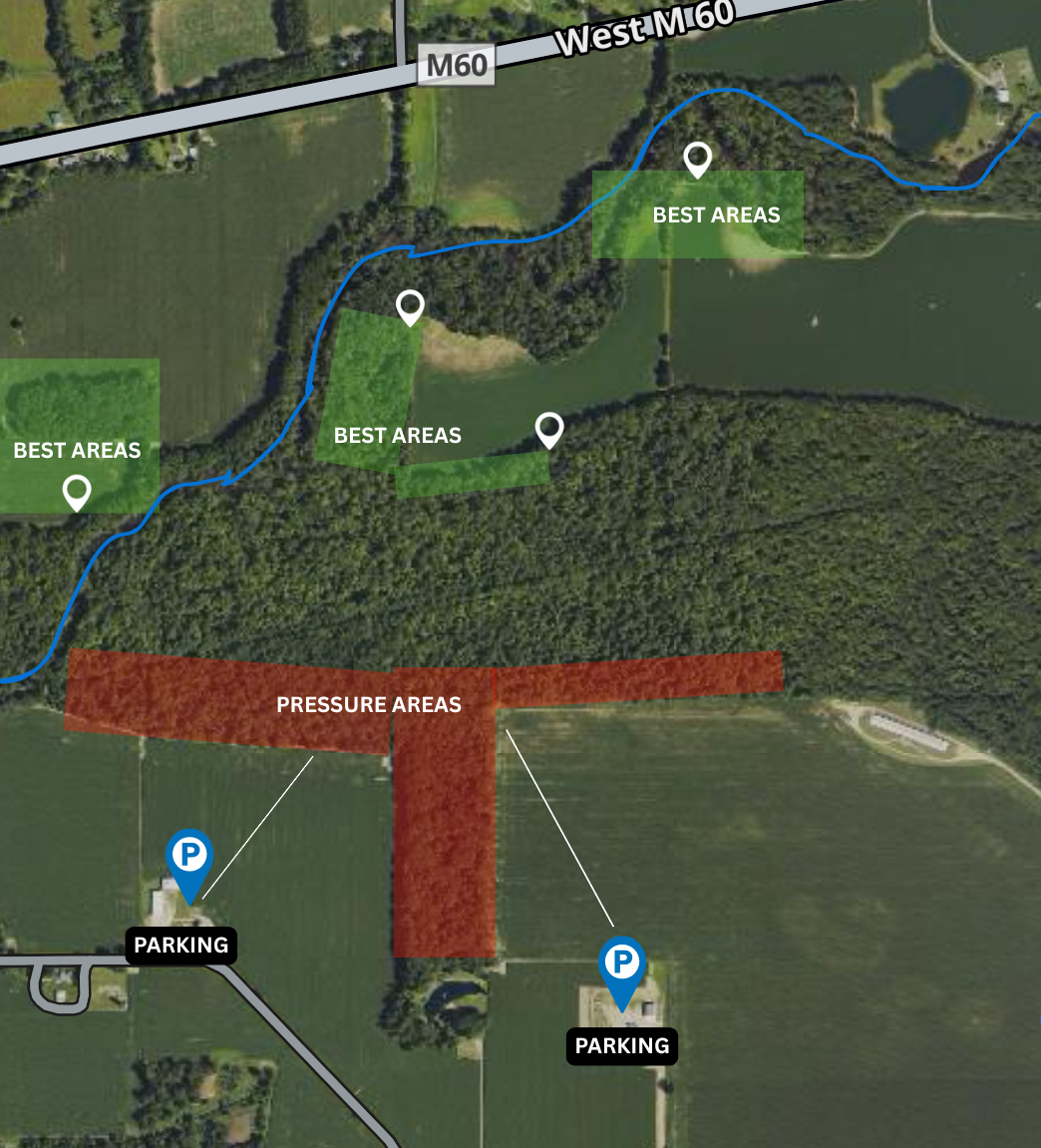
1. Start With Aerial Maps: The Midwest Pressure Triangle
Every piece of land has a predictable pressure pattern. To find true low-pressure pockets, map out these three elements:
A. Parking-Lot Pressure Rings
- Think of every parking lot as the center of a ripple. Most hunters stay within 300–600 yards of their vehicle.
- Mark that ring on your map and then look just outside it.
B. High-Use Access Trails
- Trail cameras and boot tracks confirm the same thing every year: Hunters love walking the easiest path.
- Creek-bottom access, elevation climbs, and cattail edges naturally filter hunters away. What pushes people out often pulls deer in.
C. Terrain Traps Where Deer Escape Pressure
In the Midwest, pressured deer commonly relocate to:
-
Timber-to-ag transition lines
-
Cattail marsh edges with just enough high ground to bed
-
Hard-to-reach ridge “fingers”
-
Creek bends or oxbows with only one safe entrance
-
Small isolated cover pockets tucked between ag fields
These spots rarely appear in national hunting articles but they consistently hold pressured bucks.
2. The Hidden Power of Timber-to-Ag Transitions
Deer use transition lines as pressure escape routes.
These edges matter because they:
-
Provide quick food-to-cover movement
-
Offer multiple exit routes (deer love options)
-
Naturally hide deer movement in fragmented habitat
How to use this:
Walk the less obvious side of the transition areas often the backside where hunters rarely go because it’s “too far” or “too thick.” sometimes going in where other hunters aren’t beat the deer in all there senses because they don’t expect it.
3. Creek-Bottom Access: Your Silent Advantage
Most hunters avoid getting wet. That’s your opportunity.
Creek-bottom access lets you slip in with:
-
Minimal noise
-
Minimal ground scent
-
Natural terrain blocking deer from seeing you approach
Look for:
-
Narrow pinch points where deer cross
-
Steep banks paired with brushy cover
-
Side hills that create interior bedding away from pressure
This is especially effective during firearm season when deer push into creek systems for safety.
4. Cattail Marsh Boundaries: The Big-Buck Honey Hole
Cattail marshes intimidate hunters and deer know it.
Where cattails meet:
-
hardwood islands (transition areas)
-
small interior ridges
-
grassy openings
…you’ll find some of the best bedding in pressured states.
If you’re willing to grind through mud and cattails, you’re already part of the 10% of hunters who ever reach these spots.
“Best Areas” vs. “Pressure Areas”: The Aerial Map
5. What Actually Failed for Me
🆇 Following the Sign Too Closely
I used to hunt wherever I found fresh rubs and scrapes. The problem? If you’re on public land, everyone else most likely found those too. Those spots never produced daylight movement and that’s when you look into less pressured areas.
🆇 Trusting Old Trails
Early in my hunting career, I’d set up over beaten-down trails. Turns out, half of them were nighttime-only highways.
🆇 Staying Too Close to Access
Even 400 yards from a parking lot can be overhunted during firearm season. Deer learn the pressure outline.
Golden lesson: Every step you take away from predictable human movement increases your odds.
6. Where to Hunt Checklist – If You Have 3/5 or More, Hunt It.
Deer Hunting Pressure Checklist
Click each item to mark it complete: